

NEWS
What Is Temperature in Science? Understanding Its Role
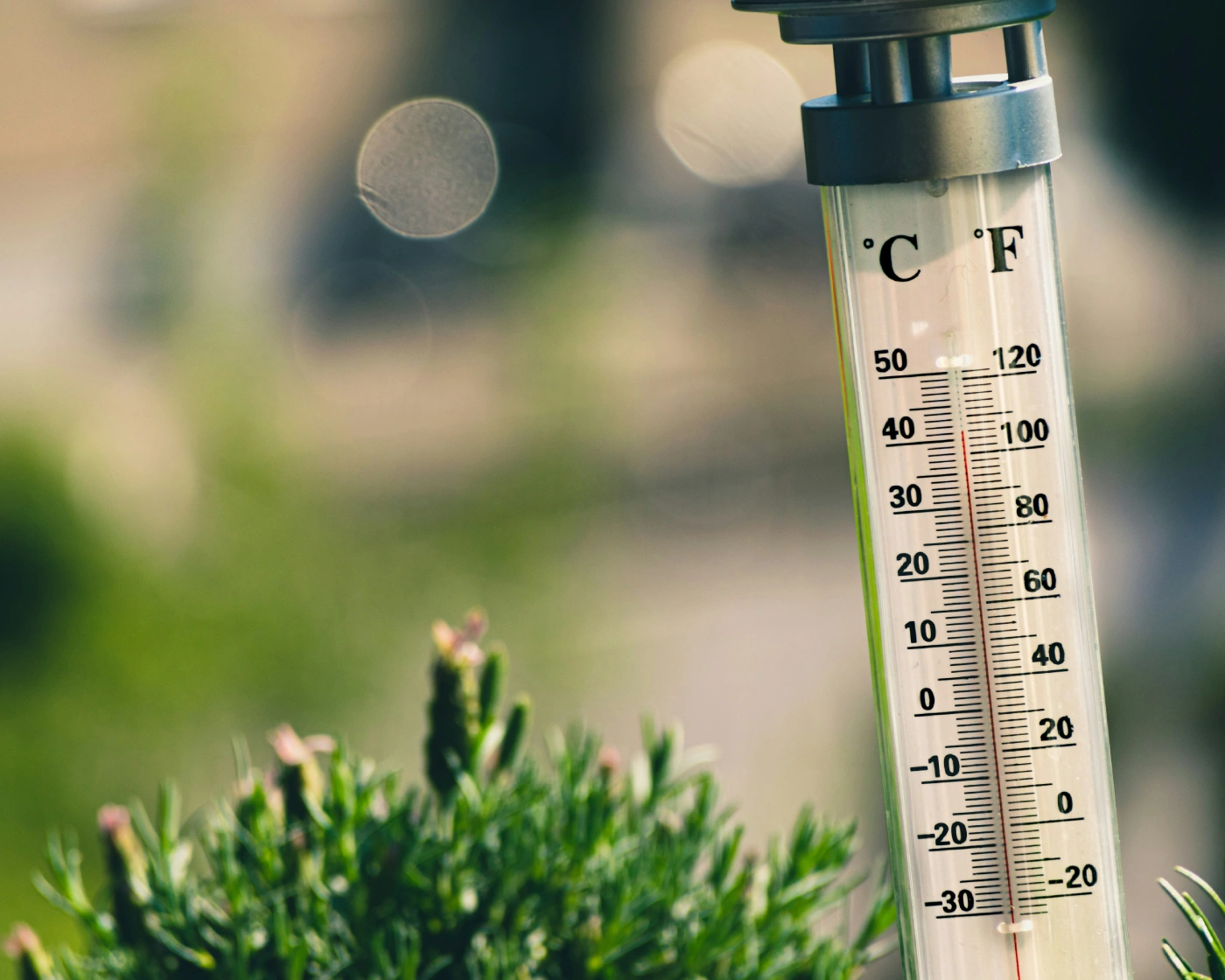
What Is Temperature in Science? Understanding Its Role
Temperature is one of those concepts students encounter almost daily, whether they are checking a weather forecast, running a chemistry experiment, or studying gas laws. Yet its scientific definition is more precise, and more interesting, than the casual meaning most people carry.
Understanding temperature properly, what it measures, how it is quantified, and why it matters across disciplines, is essential groundwork for any student pursuing science. This guide breaks it all down clearly.
The Scientific Definition of Temperature
In everyday language, temperature tells us how hot or cold something is. In science, that intuition is refined into something more specific: temperature is a measure of the average kinetic energy of the particles in a substance.
Every substance is made of atoms or molecules in constant motion. The faster these particles move, the higher the temperature of the substance. When you heat a cup of water, you are adding energy that causes water molecules to move more rapidly. When it cools, the molecules slow down.
This particle-level understanding explains why temperature is a property of a system and why it differs from heat, a distinction that trips up many students in their early years of science study.
Temperature vs Heat: A Critical Distinction
These two terms are often used interchangeably in casual conversation, but they mean very different things in science. Getting this distinction right is fundamental to understanding thermodynamics.
Property | Temperature | Heat |
Definition | Average kinetic energy of particles | Energy transferred between systems |
Type | State property (describes a system) | Process quantity (describes a transfer) |
SI Unit | Kelvin (K) | Joule (J) |
Measurable by | Thermometer | Calorimeter |
Directionality | No direction; describes a state | Flows from hot to cold |
Can be zero? | Yes (absolute zero = 0 K) | No, but heat transfer can be zero |
Heat flows from an object at a higher temperature to one at a lower temperature until equilibrium is reached. Temperature is what you measure; heat is what moves. This distinction is central to chapters on thermodynamics, calorimetry, and thermal expansion in both physics and chemistry.
Scales of Temperature Measurement
Temperature is measured using different scales depending on context, geography, and the field of study. Students in science must be fluent in all three major scales and able to convert between them.
Celsius (degree C)
The Celsius scale is the most commonly used scale in everyday life and in most scientific contexts outside of the United States. It sets the freezing point of water at 0 degrees and the boiling point at 100 degrees at standard atmospheric pressure.
Fahrenheit (degree F)
The Fahrenheit scale is primarily used in the United States. Water freezes at 32 degrees Fahrenheit and boils at 212 degrees. Students working with American scientific literature or preparing for internationally standardised tests should be comfortable converting between Fahrenheit and Celsius.
The conversion formula is: C = (F – 32) multiplied by 5/9, and F = (C multiplied by 9/5) + 32.
Kelvin (K)
The Kelvin scale is the SI unit of temperature and the most important scale in scientific work. Unlike Celsius and Fahrenheit, Kelvin has no negative values because it begins at absolute zero, the lowest theoretically possible temperature where particle motion effectively ceases.
0 Kelvin equals -273.15 degrees Celsius. The conversion is simple: K = C + 273.15. Kelvin is used extensively in physics, chemistry, and astrophysics because many scientific laws and equations require an absolute temperature scale.
For students in the science stream, mastering temperature conversions and understanding when to apply each scale is non-negotiable. At the top pu colleges in bangalore for science, this topic appears across multiple subjects including Physics, Chemistry, and even Biology, where enzyme activity and metabolic rates are closely tied to temperature.
Absolute Zero: The Coldest Possible Temperature
Absolute zero (0 K or -273.15 degrees Celsius) represents the point at which all thermal motion in a system theoretically stops. At this temperature, particles have minimum energy and no heat can be extracted from the system.
Absolute zero has never actually been achieved in a laboratory, though scientists have come incredibly close, within billionths of a degree. The pursuit of temperatures near absolute zero has led to the discovery of phenomena like superconductivity and Bose-Einstein condensates, which have wide-ranging implications for future technology.
Understanding absolute zero is also the foundation for the Third Law of Thermodynamics, which states that the entropy of a perfect crystal at absolute zero is exactly zero.
How Temperature Is Measured
A thermometer measures temperature by exploiting the predictable way materials expand, contract, or change properties in response to heat. Different types of thermometers are suited to different ranges and precision requirements.
- Liquid thermometers: Mercury or alcohol expands in a glass tube as temperature rises. Common in classrooms and households.
- Digital thermometers: Use electronic sensors to measure temperature quickly and accurately. Standard in clinical and industrial settings.
- Infrared thermometers: Detect thermal radiation emitted by a surface without physical contact. Widely used in medicine and manufacturing.
- Thermocouples: Two dissimilar metals joined at a point generate a voltage proportional to temperature. Used in very high-temperature industrial applications.
- Resistance Temperature Detectors (RTDs): Measure temperature through changes in electrical resistance. Extremely precise and used in scientific research.
Lab practicals involving thermometry and calorimetry are standard components of the science curriculum, and students at the best colleges in bangalore for puc science get hands-on time with multiple thermometer types as part of their practical preparation for board exams and entrance tests.
Temperature in Physics: Key Applications
Temperature appears throughout physics in ways that extend well beyond a simple reading on a thermometer.
Thermal Expansion
Most solids, liquids, and gases expand when heated and contract when cooled. This principle underpins the design of bridges (expansion joints), railway tracks (gaps between rails), and thermostats. The formula for linear expansion is: change in length equals original length multiplied by the coefficient of linear expansion multiplied by the change in temperature.
Gas Laws
Charles’s Law states that the volume of a gas is directly proportional to its absolute temperature at constant pressure. Boyle’s Law and the Ideal Gas Law (PV = nRT) also rely on temperature in Kelvin. These relationships are fundamental to understanding gas behaviour in engines, weather systems, and industrial processes.
Thermodynamics
The four laws of thermodynamics are built around temperature as a core variable. From the zeroth law (which defines thermal equilibrium) to the third law (which establishes absolute zero), temperature is the thread that runs through all of them.
Temperature in Chemistry and Biology
In chemistry, temperature directly affects reaction rates. The Arrhenius equation quantifies how increasing temperature raises the rate of a chemical reaction by increasing the proportion of molecules with sufficient activation energy to react.
In biology, temperature governs enzyme activity. Each enzyme has an optimum temperature at which it functions most efficiently. Above this point, the enzyme denatures and loses its structure. Below it, the reaction rate slows. This is why fever can be dangerous: elevated body temperature begins to disrupt enzyme-driven biochemical processes.
These cross-disciplinary applications make temperature one of the most examined topics across Physics, Chemistry, and Biology papers. Students at the best pre university colleges in bangalore often encounter temperature-related questions in all three subjects within the same examination season.
Key Takeaways
- Temperature measures the average kinetic energy of particles in a substance, not the total energy
- Temperature and heat are distinct: temperature describes a state; heat describes energy in transfer
- The three main scales are Celsius, Fahrenheit, and Kelvin; Kelvin is used in scientific equations
- Absolute zero (0 K) is the theoretical minimum temperature; it has never been fully achieved
- Temperature affects physical, chemical, and biological processes, making it a truly cross-disciplinary concept
- Thermometers measure temperature by exploiting predictable changes in material properties
Conclusion
Temperature is far more than a number on a thermometer. It is a fundamental property that governs how matter behaves, how chemical reactions proceed, and how living systems function. For science students, building a precise understanding of temperature, its definition, its scales, and its applications, is one of the most productive investments they can make.
Whether you are preparing for board exams or entrance tests like JEE or NEET, expect temperature to appear in multiple chapters across subjects. Choosing one of the best pu colleges in bangalore with strong science faculty and well-equipped labs will ensure that this foundational concept is taught with the depth and clarity it deserves.
Frequently Asked Questions
- What is the difference between temperature and heat?
Temperature measures the average kinetic energy of particles in a substance. Heat is the energy that transfers from a hotter object to a cooler one. Temperature is a state; heat is a process.
- Why is Kelvin used in scientific equations instead of Celsius?
Kelvin is an absolute scale that begins at the lowest possible temperature (absolute zero). Many scientific laws and equations, like Charles’s Law and the Ideal Gas Law, require absolute temperature values to function correctly. Negative temperatures on the Celsius scale would produce incorrect results in these equations.
- What is absolute zero and has it been achieved?
Absolute zero is 0 Kelvin or -273.15 degrees Celsius, the theoretical point at which all particle motion stops. It has never been fully achieved, though scientists have reached within billionths of a degree using advanced cooling techniques.
- How do I convert Celsius to Kelvin?
Simply add 273.15 to the Celsius value. For example, 25 degrees Celsius equals 298.15 Kelvin. For most exam purposes, adding 273 is sufficient.
- Why does temperature affect chemical reaction rates?
Higher temperatures increase the kinetic energy of molecules, meaning more collisions occur with sufficient energy to overcome the activation barrier. The Arrhenius equation quantifies this relationship.
- What happens to enzymes at very high temperatures?
Enzymes are proteins with specific three-dimensional shapes. At temperatures above their optimum, the molecular vibrations become too intense, disrupting the bonds that maintain the enzyme’s shape. The enzyme denatures and can no longer catalyse reactions.
- Is temperature a scalar or vector quantity?
Temperature is a scalar quantity. It has magnitude but no direction. This distinguishes it from vector quantities like force or velocity, which have both magnitude and direction.
- What is thermal equilibrium?
Thermal equilibrium occurs when two objects in contact reach the same temperature and net heat transfer between them stops. This is the basis of the zeroth law of thermodynamics, which allows us to use thermometers to compare temperatures.